Dear Friends,
Are we banging our heads against brick walls? What Many Men Still Aren’t Understanding About Misogyny in America (And why women keep finding themselves explaining it).
I didn’t expect the moment to land in my body the way it did. When I first heard about the exchange — the joking moment between Donald Trump and members of the United States men's national ice hockey team about “having” to invite the United States women's national ice hockey team — part of me had that familiar, almost reflexive thought: Really? Still? It wasn't a shock. It was recognition — deep, cellular, weary recognition. Then the simmering anger arrived, right on cue. Same pattern, new content. Same old diminishment dressed up as a joke. Just one more piece added to the growing avalanche.
If you’re a woman reading this, you may know the feeling I mean — that quiet drop in the stomach when something sexist is publicly brushed off as “just a joke”. That feeling taps into a much longer personal history of moments being left out of the room, talked over, lightly or overtly minimized, told, indirectly or directly that your presence is optional or possibly an obligation of sorts. You can start to doubt your own perceptions and perspective which is why we hear the term “gaslighting” so frequently in tandem with misogyny.
What struck me most wasn’t the joke itself. It was how ordinary it sounded, how easily it could pass as harmless inside the culture where it was spoken, and how familiar the pattern felt from the outside. That gap between how these moments land for many men and how they accumulate for many women is the space I want to sit in today. Here are some points to help us understand why it feels like no progress towards equality is being achieved, and why the men in various roles in our lives may still seem very slow on the uptake in a matter that is very high stakes for us personally, now more than ever.
1. Intent Is Not the Same as Impact. Many men are still listening for overt hatred, while much of modern misogyny operates through patterns and outcomes. So the conversation often goes like this: Women: “This harms us.” Men: “But I don’t hate women.” Both statements can be sincerely felt and still miss each other. For example, workplace policies that quietly penalize maternity leave may feel neutral to the people enforcing them, but the gendered impact is real and cumulative. Some men are not trying to uphold misogyny, but many are simply standing comfortably inside systems that do.
2. Today’s Misogyny Often Feels Normal. Often we are not dealing with loud, explicit sexism. Much of what women encounter now is baked into everyday norms. It shows up in whose expertise gets second-guessed, whose pain gets medically minimized, who is expected to manage safety, whose ambition gets subtly penalized. Because it’s so normalized, many men genuinely don’t register it.
3. It’s Hard to See Friction You Don’t Personally Feel. If you have not routinely calculated your safety walking to your car with a key between your fingers, turned around to see who is behind you on a dark street, had your authority or expertise repeatedly questioned, been talked over, been body shamed or victim blamed, then misogyny can feel abstract rather than lived. When many men say, “I just don’t see it,” what often sits underneath is: I don’t experience the background stress load you’re describing. Our nervous systems are tuned differently so extra vigilance and stress matters.
4. Male Bonding Culture Can Quietly Reinforce Exclusion. The recent moment when Donald Trump joked with the United States men's national ice hockey team is a useful example. Inside many male spaces, the exchange likely registered as playful, routine, and not a big deal. But for many women, especially those long used to being left out of high-status rooms, it landed as something familiar: men centered, women optional, women’s excellence downplayed. What matters is not only what was meant, but the pattern it echoed.
5. These Conversations Easily Trigger Defensiveness. When misogyny is raised, many men unconsciously hear: “You’re being blamed” and/or “You’re the problem.” Once someone feels accused, their nervous system shifts toward defense. It focuses on minimizing, changing the subject, arguing the data, and tone policing. Women then end up doing extra emotional labor just to keep the conversation productive which adds to the exhaustion and discouragement.
6. Many People Still Think Gender Inequality Is Mostly Solved. A quiet but powerful cultural story persists: “Things are equal now.” But the data still show gaps in things like wages, political power, representation in leadership, medical research attention, rates of sexual violence, and reproductive autonomy. When someone’s mental map is outdated, women first have to re-establish reality before deeper understanding can happen.
7. The Burden of Explaining Still Falls on Women. Notice the pattern. Women are often expected to bring the research, share personal stories, stay calm, avoid sounding angry, make it easy to hear, and reassure the listener. That is a lot of relational labor layered on top of lived experience. So when women sound tired, it’s not just about one conversation, it’s about how many times the translation has been required. Olympic gold medalist Hilary Knight said it best in her recent press conference when asked about the joke. “And now I have to sit — and anybody has to sit — in front of you and explain someone else's behavior. It's not my responsibility."
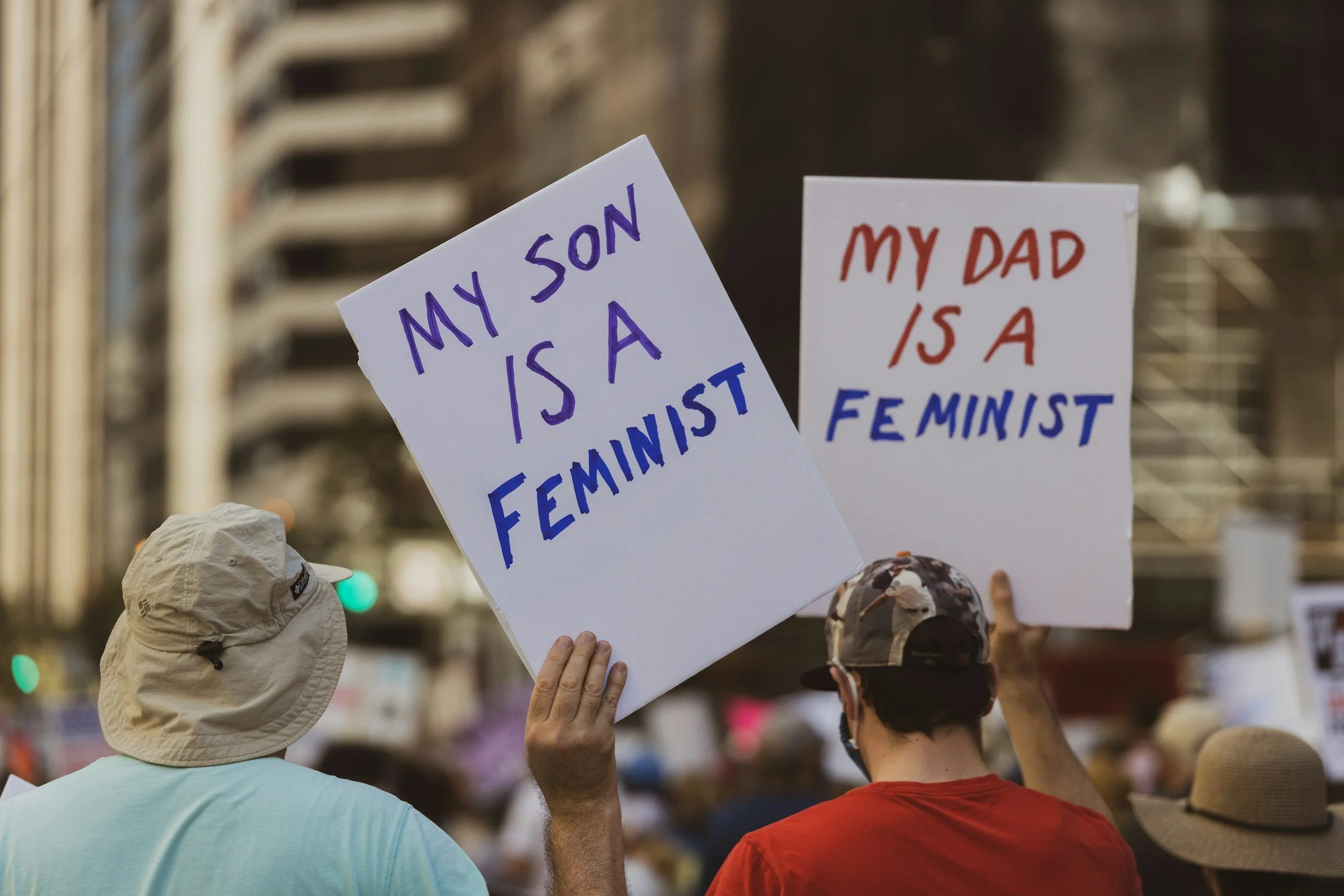
8. Many Men Want to Get It But Don’t Know How. There is a meaningful group of men who are not resistant, just unsure what they’re missing. What often helps is a shift from: “Did I personally do something wrong?” to “What patterns am I part of, even unintentionally?” “Where might women be carrying more than I realized?” That kind of curiosity changes conversations quickly. The work now is not convincing men they are villains. It is inviting more of them to notice the warm and hospitable water they have been swimming in all along, and that their female friends, lovers, and or colleagues may be drowning in an undertow in the very same waters.
Common isn’t the same as normal and it certainly isn’t the same as acceptable. Misogyny may be woven into daily life, but repetition doesn’t soften its impact or excuse the systems that keep it in place. For many women, moments like watching extraordinarily talented athletes reduced to a punchline don’t land lightly; they accumulate, adding weight to an already heavy load.
So what do we do now? We get more precise and more active. Women: keep naming what you see, protect your energy, and choose where your voice will matter most. Document patterns. Support one another publicly. Refuse the pressure to soften what is clearly harmful. Men: treat discomfort as data, not an accusation. When something gives you pause, lean in instead of laughing it off. Listen without immediately defending intent. Notice who is being interrupted, overlooked, or asked to carry the extra load, and use your voice in the room when it counts.
Still, we keep going. We read, write, connect, and yes, often repeat ourselves because naming the pattern is part of changing it, and to me, it is labor that feels worth my while. The hopeful signal in all of this is the quiet pause so many people felt: something about this isn’t right. That instinct is the starting point. What comes next is action in conversations, in workplaces, in everyday moments that seem small but aren’t. If we hold onto that awareness and if more men learn to trust and follow that discomfort rather than laugh past it, we move closer to real accountability and freedom (or change).